Self-taught developer / Systems notes
A quiet place for
life, systems,
and long learning.
I am Huynh Nhan Quoc, a self-taught developer from Tam Ky, Vietnam. I have been learning through real products, broken deployments, private systems, and years of starting again. This site keeps that road in one place: the ideas, the work, and the life around them.
Ways into this site
Enter through the question you have.
Explore the archive
One body of work, several ways in.
Look up one concept, follow a topic across formats, or begin with a collection selected in reading order.
choose where to begin- concepts
- 31
- articles
- 64
- topics
- 20
- collections
- 4
Now
What is moving today.
Latest articles
Fresh from the long road.
 Newest / 2026-08-23
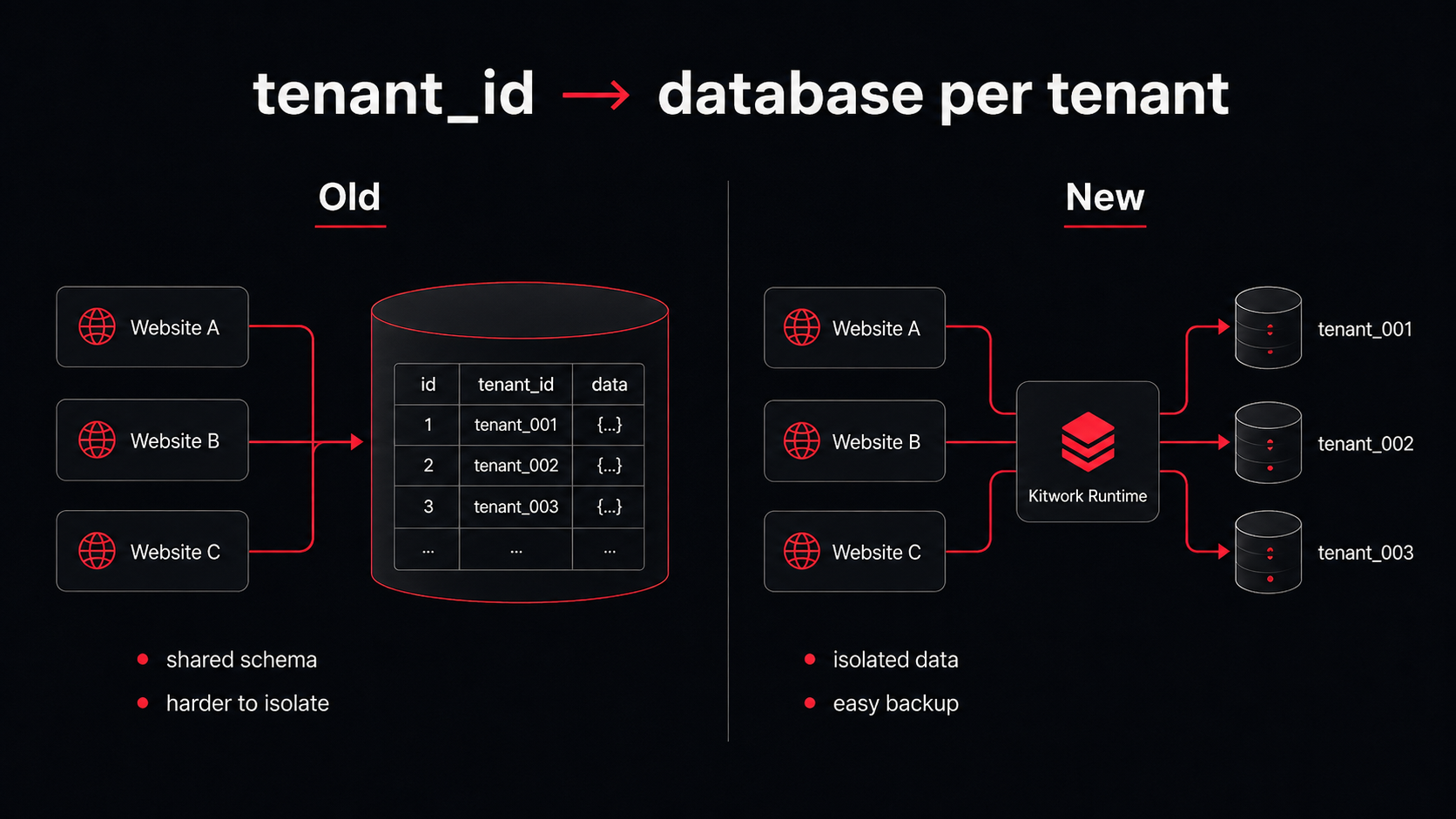
I Never Planned to Build a Database. I Just Wanted Kitwork to Manage Thousands of Websites More Simply.
From tenant_id, PostgreSQL, and Turso to a small database designed specifically for Kitwork.
read
article
Newest / 2026-08-23
I Never Planned to Build a Database. I Just Wanted Kitwork to Manage Thousands of Websites More Simply.
From tenant_id, PostgreSQL, and Turso to a small database designed specifically for Kitwork.
read
article A concept becomes executable
The path from text to behavior.
Runtime
The place where code receives memory, values, limits, and a world in which to run.
Bytecode
The compact instruction layer between source language and machine behavior.
Virtual machine
A machine made of software that reads those instructions and enforces their boundaries.
The road so far
Not a straight line.
Blogger and HTML. The first small changes that made the hidden structure of a website visible.
A friend's coffee shop and a Firebase night. Dependency stopped being an abstract technical word.
Home, delivery work, and Kitstack. Real projects began shaping a private Go platform.
Opening the useful parts. Kitwork, concepts, articles, and source code turn private lessons into public material.
This site is also an experiment
The URL follows the directory tree.
Each folder can inherit layout, metadata, and runtime behavior from the folders above it. The page you are reading is both a personal homepage and a working Kitwork tenant.